Swalwell has been an embarrassment for the Democrat Party. It’s getting worse.
Now Eric Swalwell is under investigation for a horrifying reason.
He’s Gone. His Campaign Checks Are Still Flowing.
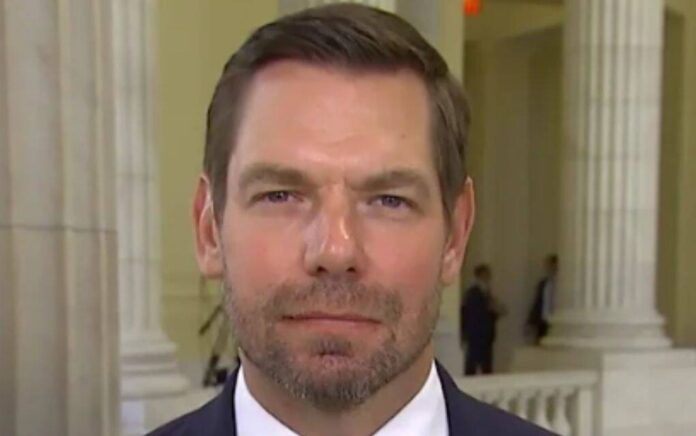
Eric Swalwell resigned from Congress in April. He withdrew from the California governor’s race the same day sexual assault allegations shattered his political career. He has been notably silent in the weeks since. But his campaign finance machine has been anything but quiet.
New FEC and California state filings show that Swalwell’s gubernatorial campaign has paid Sara Azari’s New York law firm more than $313,000 in total — $40,000 in the initial wave and then two additional payments of $250,000 and $23,251 for “campaign legal compliance” in the most recent reporting period alone. Azari is the attorney publicly defending Swalwell against allegations that he sexually assaulted a former congressional aide and harassed multiple staffers. The Manhattan District Attorney’s office opened an investigation on April 11, after a former aide alleged Swalwell sexually assaulted her while she was inebriated after a political event in 2024. The same woman accused him of raping her while drunk in 2019. Multiple additional accusers have come forward across jurisdictions.
Azari has defended Swalwell aggressively in public, appearing on NewsNation — where she is also employed as a legal analyst — and arguing that “regret is not rape.” She has publicly stated that Swalwell “categorically and unequivocally” denies all the allegations.
None of which answers the central question now being asked in Sacramento and Washington: Is it legal to use campaign funds to pay for personal criminal defense?
The Legal Gray Zone — And Why It Matters To Donors
Campaign finance law distinguishes between legal expenses that would not exist “but for” a candidate’s candidacy — which are permissible — and personal legal expenses that predate or are unrelated to the candidate’s official role, which are not. The line between the two is not always clear, but the general principle is well established: campaign donors give money to support political campaigns, not to fund a candidate’s personal legal defense against criminal allegations.
The sexual assault allegations against Swalwell involve conduct that allegedly occurred in 2019 and 2024 — in his personal capacity, not as part of his official duties as a congressman or gubernatorial candidate. The FEC filings describe the payments as “campaign legal compliance,” a characterization that experts who reviewed the filings told reporters is unusual and may not accurately describe what the payments are covering.
A former FEC commissioner, quoted in the original San Francisco Chronicle reporting on the initial $40,000 payment, said the filing pattern “should cause the agency’s auditing arm to investigate.” The total amount has since grown more than sevenfold. A source close to Swalwell pushed back on the scrutiny, telling Newsweek that “financial arrangements between an attorney and client are protected” and calling the characterization of the payments a “insinuation” rather than fact.
What The Money Says That The Candidate Won’t
Swalwell himself has been almost entirely invisible since his April 14 resignation. His name still appeared on the June 2 California gubernatorial primary ballot — a reminder to voters of the gubernatorial campaign that collapsed so quickly after the allegations surfaced. He has not held a press conference. He has not given extended media interviews.
His attorney, however, has spoken extensively. And his campaign’s financial filings have spoken in numbers. Together, they present a picture of a man who is, despite his public silence, engaged in a sustained and expensive legal defense effort — financed, at least in part, by the people who donated to a campaign for California governor that no longer exists.
Donors who gave money to Swalwell for Governor presumably intended to support a political campaign. Whether they intended to underwrite hundreds of thousands of dollars in legal fees for a candidate defending himself against rape and sexual assault allegations is a question the FEC may ultimately be forced to answer.