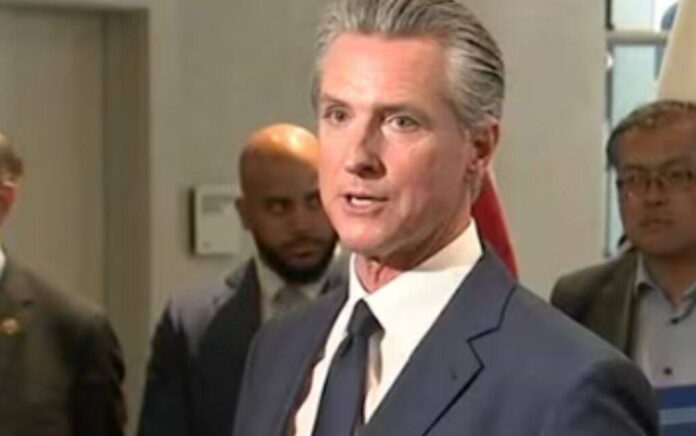
Newsom thought he could be president. But now no one is on his side.
Because Gavin Newsom just tanked his own career with one dumbfounding decision.
A Tale Of Two Responses To Pain At The Pump
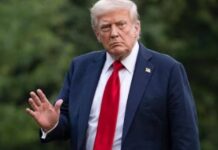
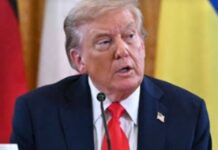
As gas prices soared past $6 a gallon across California — the highest in the nation by a significant margin — President Trump announced Monday that he would suspend the federal gas tax, saying he wants to pause the levy “for a period of time” to relieve pressure on American families hammered by the energy-price fallout from the Iran war.
California Gov. Gavin Newsom’s response, delivered at a state capitol hearing earlier in the week, went in a different direction. He dismissed calls for a state gas tax holiday and blamed the price surge squarely on the president. “Now, as it relates to the cost of fuels, California hasn’t changed anything as it relates to cost. Those baseline costs have been static. But the cost at the pump has not been, for one reason: Donald Trump’s recklessness as it relates to the war in Iran, period, full stop.”
The framing will do little to ease the pain of California drivers staring at $6.16-a-gallon averages. And it sidesteps something that came out awkwardly at the very same hearing where Newsom was defending his inaction: even economists and energy experts assembled by California Democrats acknowledged that the state’s punishing fuel taxes, environmental mandates, and regulatory costs are the primary reasons California drivers pay dramatically more than the national average — regardless of what is happening with crude oil at any given moment.
Severin Borenstein, a University of California, Berkeley Haas School of Business economist, said at the hearing that a temporary adjustment to the state’s tax structure “could help consumers” when crude prices spike. The governor’s response, in effect, was to reject the idea and point the finger eastward.
Trump Acts — And Newsom Looks The Other Way
Trump’s proposed suspension of the federal gas tax — 18.4 cents per gallon for gasoline and 24.4 cents per gallon for diesel — requires congressional approval, and both the House and Senate are controlled by Republicans who have expressed support for the measure. “I think it’s a great idea,” the president said in a CBS interview. “Yup, we’re going to take off the gas tax for a period of time, and when gas goes down, we’ll let it phase back in.” Energy Secretary Chris Wright similarly signaled the administration’s commitment, saying: “We are working every day to offset this rise in prices because of a critical conflict in Iran to drive prices down, and we’re open to all such ideas.”
The contrast with Newsom is notable. His refusal to discuss even a temporary suspension of California’s state gas tax — which runs considerably higher than the federal levy and is the single largest contributor to the state’s premium over national averages — drew sharp public criticism. California political commentator Steve Hilton was characteristically direct: “Any decent governor who cared about regular working people would have done this weeks ago. But Gavin Newsom is an out of touch elitist climate fanatic whose only interest is taking potshots at President Trump to push his pathetic book and presidential campaign.”
A Supply Crisis That California’s Own Policies Helped Create
Newsom’s deflection is even harder to sustain in light of California’s deepening energy vulnerability, which years of Democratic policy choices have made dramatically worse. The state now depends heavily on imported crude from the Middle East, Asia, and Latin America after years of regulations discouraging in-state production. State data shows approximately one-third of California’s foreign crude supply comes from countries whose oil shipments travel through the Strait of Hormuz — the very waterway now threatened by the Iran conflict.
The last tanker to make it through the strait before the conflict shut it down — the Hong Kong-flagged vessel “New Corolla,” carrying 2 million barrels from the Middle East — arrived at the Port of Long Beach to considerable attention. California’s oil industry warned after its arrival that the state now faces the challenge of replacing roughly 200,000 barrels of oil per day from Persian Gulf sources alone.
Newsom also confirmed his pride in California’s energy posture, saying he was “proud of being the dominant force in terms of changing the way we produce and consume energy for this nation.” That pride may be difficult to sustain in the months ahead, as California refiners scramble to replace Persian Gulf crude, summer driving season pushes demand higher, and the governor continues to tell drivers that their misery is someone else’s fault.