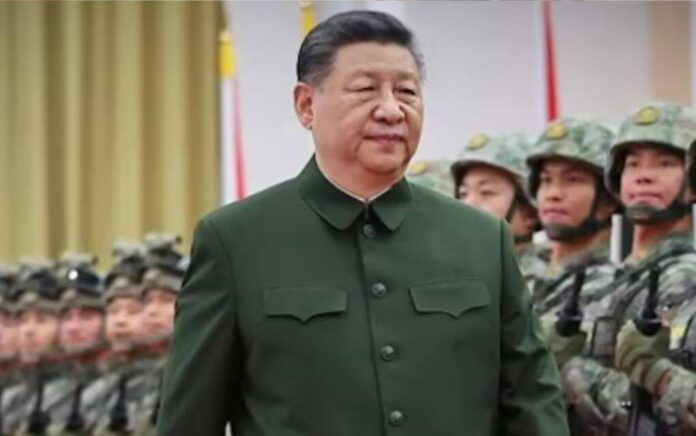
Trump is over in Asia. Anything could happen.
But Donald Trump holds a huge advantage over China.
History Says Don’t Count America Out
The commentariat’s pattern of periodically pronouncing a foreign rival as the unstoppable force that will finally unseat American dominance is well established. The Soviets were going to bury us. The Japanese were going to buy us. Now China is supposed to be the civilization-level existential threat that reduces America to a second-tier power.
Victor Davis Hanson, the Hoover Institution senior fellow and classical historian who has spent decades dissecting America’s geopolitical cycles, is not impressed by the argument. Appearing on “The Ingraham Angle” Friday, Hanson offered a cold-blooded structural analysis of the Trump-Xi summit — and his conclusion was unambiguous.
“All the data show that the cards are in Donald Trump’s hands,” Hanson said. “He can be as magnanimous as he wants, but he has all the cards in his hand, and they don’t have any.”
Trump departed Beijing Friday after his first visit to China since November 2017 — a trip that had been pushed back from late March after the outbreak of fighting in Iran. He left with trade commitments, Boeing aircraft orders, an Nvidia chip deal, and a Xi pledge not to arm Iran. Whatever the summit left unresolved, the president came home with more than he arrived with.
Hanson places China’s current position in the sweep of the same historical pattern that produced Soviet decline and Japan’s economic stagnation. “China is just the latest phase that we’re all supposed to be upset about,” he said, “but it’s going to meet the same fate vis-à-vis us that these other so-called superpowers experienced.”
The Structural Weaknesses Nobody In Beijing Can Fix
What makes Hanson’s analysis particularly useful is his focus on the underlying variables that Xi Jinping cannot simply decree away — the deep demographic, energy, and economic conditions that define the limits of Chinese power regardless of how many aircraft carriers Beijing commissions or how many missiles it deploys.
China’s birth rate has collapsed. The demographic dividend that powered its manufacturing miracle for three decades has inverted into a demographic liability that will compound with every passing year. The workforce is shrinking. The elderly population is expanding. The social spending required to sustain the latter while the former contracts is a fiscal trap that Chinese Communist Party central planning cannot resolve.
Then there is oil. China is enormously dependent on imported crude, and the bulk of that supply travels through sea lanes that — as the Iran war has demonstrated conclusively — the United States Navy controls. “China is not going to be a player,” Hanson said flatly. “And if it is a player, it’s going to be with the permission of the United States.”
The American AI lead compounds the advantage. The United States continues to dominate the foundational models and the chip architecture that power the next industrial revolution. China’s access to that technology now depends, in substantial part, on decisions made in Washington — as the Nvidia H200 chip deal confirmed this week.
Taiwan — And Why Trump Won’t Sell It For An Iran Favor
The summit’s conspicuous omissions were as revealing as its deliverables. The White House readout notably declined to mention Taiwan; the Chinese side put it at the center of their account, with Xi warning Trump that mishandling the issue could push the two nations toward “conflict.” Trump himself, speaking to Bret Baier aboard Air Force One, acknowledged Xi’s warning and expressed that he is not looking to see Taiwan go independent or to “travel 9,500 miles to fight a war” — language that gave Taiwan’s government some anxiety and required careful parsing in Taipei.
Hanson argued that Trump’s Taiwan posture, whatever its imprecisions, does not amount to selling out the island in exchange for Chinese help in getting Iran to the table. “They want stuff from us, and we don’t need stuff from them,” he said. “And he’s not going to sell out Taiwan for help in Iran when he doesn’t need their help.”
That framing captures the essential American position. Trump departed Beijing having already largely achieved his strategic objectives against Iran — its military degraded, its navy destroyed, its oil exports cut in half. The notion that he would trade Taiwan’s security for help in finishing a job he has already mostly completed doesn’t survive contact with the actual facts of the summit.