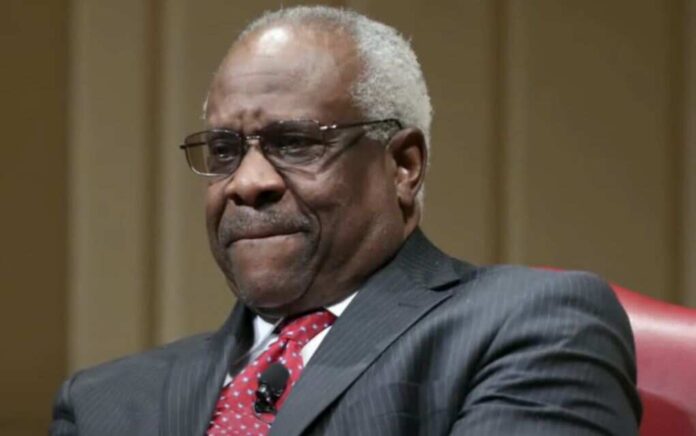
Thomas has been a hallmark of sanity on the Supreme Court. And now he’s losing his temper.
Because Clarence Thomas brought a brutal smackdown against this Democrat activist.
Thomas Sharpens the Knife on Party Coordination Limits
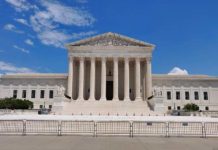
In a pointed exchange during oral arguments this week, Supreme Court Justice Clarence Thomas pressed renowned Democratic election lawyer Marc Elias on whether coordinated spending between political parties and candidates truly deserves First Amendment protection—or is merely “bill-paying” that Congress can cap at will.
Thomas zeroed in on the Federal Election Campaign Act’s limits on how much state and national parties can spend in direct coordination with their candidates, a restriction Republicans in the case say violates free speech.
“Is There Any First Amendment Interest in Coordinated Expenditures?”
“Just so I’m clear, is there any First Amendment interest in coordinated expenditures?” Thomas asked.
Elias conceded “yes,” but insisted that when a party pays a candidate’s hotel tab or catering bill in coordination with the campaign, it qualifies only as “symbolic speech” that precedent treats as a regulated contribution.
“I still don’t understand what you’re saying,” Thomas shot back. “If the party coordinates with the candidate and pays the bill, does that have a First Amendment protection or is it simply, as you say, a bill-paying exercise?”
“It is speech,” Elias replied, “but he said court precedent says the bill payment ‘is treated as a contribution, and, therefore, though it is speech, it is subject to limit by Congress in how much can be spent on engaging in that speech.’”
A Potential Earthquake for 2026 Fundraising
At stake is whether billionaires and mega-donors can pour unlimited sums into national and state party committees with the clear understanding that the money will immediately flow to coordinated spending for their favored Senate or House candidate—an end-run around individual contribution caps that could dramatically reshape financing ahead of the 2026 midterms.
Justice Brett Kavanaugh echoed Thomas’s skepticism, warning that decades of court decisions and statutes have systematically weakened parties relative to super PACs and dark-money groups.
“I am concerned that a combination of campaign finance laws and this court’s decisions over the years have together reduced the power of political parties, as compared with outside groups, with negative effects on our constitutional democracy,” Kavanaugh said. “That’s the real source of the disadvantage. You can give huge money to the outside group, but you can’t give huge money to the party, so the parties are very much weakened.”
Liberal justices pushed back hard. Justice Sonia Sotomayor warned that removing the last remaining coordinated-spending limits would leave no meaningful guardrails at all.
“Every time we interfere with the congressional design, we make matters worse… our tinkering causes more harm than good,” Sotomayor said. “Once we take off these coordinated expenditure limits, then what’s left? What’s left is nothing. No control whatsoever.”
The challenge was brought by the National Republican Senatorial Committee, the National Republican Congressional Committee, Vice President JD Vance, and former Rep. Steve Chabot—a case that could hand Republicans a massive structural fundraising advantage if the conservative supermajority rules in their favor.