The US is on the brink of war. And it could come at any point.
Now the State Department issued a Middle East evacuation order that sent alarm bells ringing.
The U.S. State Department has ordered the departure of non-emergency government personnel and eligible family members from the U.S. Embassy in Beirut, Lebanon, as a precautionary step amid heightened regional tensions.
State Department’s Precautionary Measure
On February 23, 2026, the State Department announced the ordered departure, describing it as a temporary action following a routine security assessment.
A senior official stated, “We continuously assess the security environment, and based on our latest review, we determined it prudent to reduce our footprint to essential personnel.”
The embassy continues to function with core staff, maintaining operations and the capacity to support U.S. citizens in Lebanon.
Reports indicate that around 30–50 personnel and family members have already departed, including flights out of Beirut’s airport on the day of the announcement.
Context of Escalating Middle East Tensions
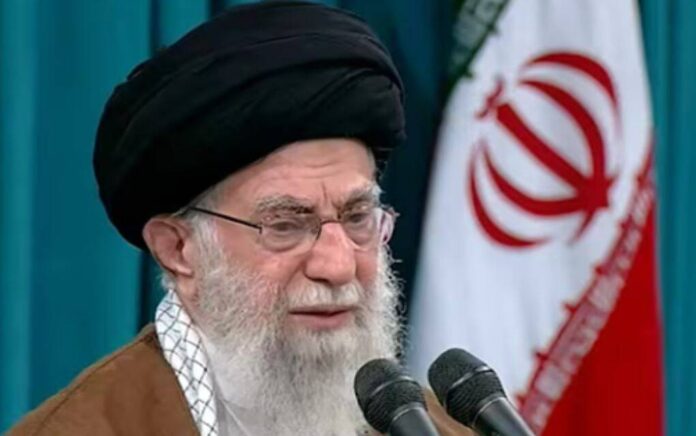
The move comes against the backdrop of strained U.S.-Iran relations, including a U.S. military buildup in the region, threats exchanged between President Donald Trump and Iranian Supreme Leader Ayatollah Ali Khamenei, and discussions of potential U.S. action against Iran over its nuclear program.
Analysts have noted Iran’s Islamic Revolutionary Guard Corps (IRGC) exerting greater influence over Hezbollah in Lebanon, with concerns that the group could be mobilized in response to any perceived threat to Tehran.
Middle East Institute senior fellow Ross Harrison observed, “If the regime in Tehran feels threatened, the likelihood of unleashing Hezbollah against Israel and U.S. regional assets increases substantially.”
He added that Hezbollah activation would likely form part of a graduated response unless an attack directly targeted Iranian leadership. Upcoming talks in Geneva on Iran’s nuclear program, uranium enrichment, and sanctions relief are scheduled for later in the week.
Implications for Diplomatic Presence and Regional Stability
This partial drawdown prioritizes personnel safety while preserving essential embassy functions, reflecting standard protocol in volatile environments rather than a full evacuation.
The decision aligns with ongoing U.S. efforts to balance diplomatic engagement—such as the Geneva negotiations—with protective measures amid risks of escalation involving Iran, Hezbollah, and broader Middle East actors.
No specific imminent threat was cited by the State Department, emphasizing the order as a prudent, evidence-based adjustment to the current security landscape.