Politicians never face the consequences of their actions. But that changed this time.
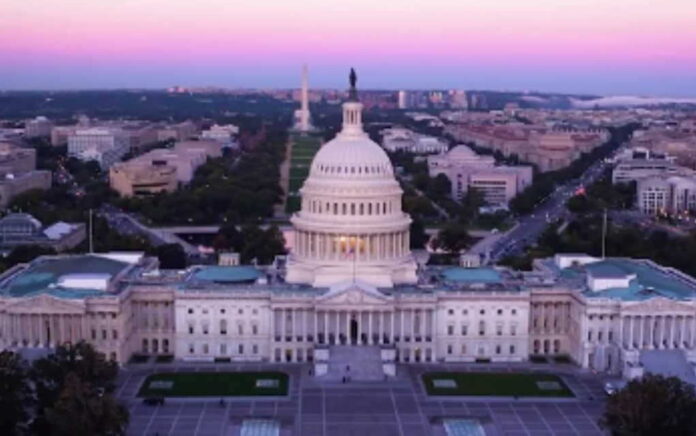
Because Congress got absolutely torched by one brave American.
There are moments in Washington when the political theater finally collapses under the weight of real human suffering, and that’s exactly what happened Tuesday when Marcus Coleman looked congressional Democrats in the eye and told them their sympathy meant nothing. Coleman’s seven-year-old daughter, Dalilah, was permanently disabled in June 2024 when an illegal alien from India driving an 18-wheeler struck her while she was just five years old. On Tuesday, testifying before the House Judiciary Committee, Coleman made clear he’s done pretending Washington cares.
“I reject your guys’ sympathy, to be honest with you,” Coleman told the committee. “There’s no way you guys are sorry. Not one of you guys have ever called me. Not one of you guys have ever reached out to me. Not when you guys have ever sat there and seen me in the hallways and said, ‘Hey, sorry about your daughter.'”
That’s not a talking point crafted by some think tank. That’s a father who has spent over two years living with the daily reality of his daughter’s permanent disability, watching lawmakers offer performative concern only when the cameras are rolling. “You guys do it right here while you guys are grandstanding on top of your soapbox. This is when you guys care. Right here inside this room is the only time you guys care,” Coleman said, and it’s hard to imagine a more devastating indictment of how Washington treats victims of the sanctuary-city policies that made his daughter’s injury possible in the first place.
The details of how this tragedy happened should infuriate every American who’s watched Democrat-controlled states thumb their nose at basic immigration enforcement. The illegal migrant who hit Dalilah obtained his commercial driver’s license in California, a state with a well-documented and shameful track record of improperly issuing CDLs to noncitizens who have no legal right to be operating heavy commercial vehicles on American highways in the first place. This wasn’t some isolated bureaucratic slip-up — it’s the predictable result of sanctuary-state policies designed to shield illegal aliens from consequences at every level of government, including licensing systems meant to keep dangerous or unqualified drivers off the road.
President Trump has already taken direct action in response to Dalilah’s case, introducing what’s become known as Dalilah’s Law during his most recent State of the Union address. The legislation would restrict illegal aliens’ eligibility to obtain commercial driver’s licenses altogether, closing exactly the kind of loophole that allowed an unauthorized migrant to get behind the wheel of an 18-wheeler and permanently alter the life of an American child.
Coleman’s testimony cuts through the abstraction that so often surrounds immigration debates in Washington. It’s easy for politicians to talk about border policy in terms of statistics and political messaging. It’s much harder to sit across from a father whose daughter will live with permanent disabilities because Washington’s sanctuary policies allowed an illegal alien with no business driving a commercial truck to obtain a license anyway.
“My daughter doesn’t deserve this,” Coleman said. “She didn’t ask for any of this. The people that jumped the fence did though.” That’s about as plainly as the moral stakes of this issue can be stated. A five-year-old girl bears no responsibility for federal and state immigration failures, yet she’s the one who has to live with the permanent consequences.
Coleman didn’t mince words about the individuals who cross the border illegally either, rejecting any notion that they’re simply desperate people making an understandable choice with no downstream consequences for anyone else. “They knew exactly what they were doing,” Coleman said. “They still chose to move forward in that direction. And every day something’s happening to somebody, and it is your guys’s fault.” Whatever sympathy exists for the broader immigration debate, Coleman’s message to the lawmakers in that room was unambiguous: the policy choices they’ve made have real victims, and his daughter is one of them.
The trucking industry has increasingly become a flashpoint in the fight over illegal immigration and public safety, with mounting evidence that lax licensing standards in sanctuary states have allowed unqualified and unauthorized drivers behind the wheel of massive commercial vehicles capable of causing exactly the kind of catastrophic harm Dalilah suffered. This isn’t a hypothetical risk — it’s a documented pattern that’s already left American families like the Colemans dealing with permanent, life-altering consequences.
What makes Coleman’s testimony so powerful is precisely what he refused to accept from the lawmakers questioning him: hollow, performative sympathy with no accompanying action. Politicians love to express concern for victims of crime and negligence when the television cameras are rolling in a committee hearing room. What they’re far less eager to do is actually change the policies that create those victims in the first place, or even pick up the phone to check in on a family whose life has been permanently upended.
Coleman’s raw, unfiltered testimony landed as a stark contrast to the careful, poll-tested language most witnesses use in front of congressional committees. He wasn’t there to make anyone comfortable. He was there to tell the truth about what it’s like to watch Washington perform concern for cameras while doing nothing meaningful to prevent the next family from ending up exactly where his has.
Dalilah’s Law now sits as one concrete legislative response to this tragedy, but its fate in Congress remains uncertain, caught up in the same partisan gridlock that has stalled countless other immigration enforcement measures in recent years. For Marcus Coleman, the stakes aren’t abstract or political — they’re measured in his daughter’s permanent disability, and in a Washington establishment that, by his own account, has shown up for exactly one hearing’s worth of concern and nothing more.