Donald Trump doesn’t beat around the bush. He knows when to carry a big stick.
And now Trump issued a devastating rebuke to the Chinese President straight to his face.
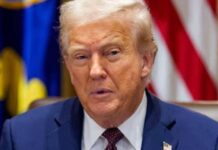
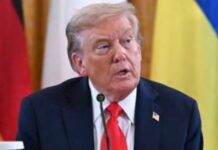
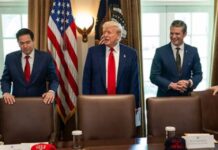
President Trump made unmistakably clear during this week’s high-stakes White House summit with Chinese President Xi Jinping that any Chinese assistance to Iran, direct or indirect, will not be tolerated. That’s the word straight from U.S. Ambassador to China David Perdue, who confirmed Friday that Trump reiterated the warning to Xi’s face during their meetings at the White House.
“We made it very clear to them weeks ago that, you know, any help that they would give Iran, whether it be direct or indirect, whether it be intelligence or parts or military equipment, was totally unacceptable. President Trump made that very clear again yesterday. This is an ongoing drumbeat,” Perdue said in an interview with CNBC. That’s not diplomatic hedging or vague concern — that’s an American president looking his Chinese counterpart in the eye and drawing a hard line on a matter of genuine national security consequence.
The stakes behind that warning are significant. The United States remains locked in an ongoing conflict with Iran, and Beijing has long been Tehran’s most important economic lifeline, buying the lion’s share of Iran’s oil exports even under heavy American sanctions. Any Chinese willingness to prop up the Iranian regime with military hardware, intelligence sharing, or sanctions-evasion support would represent a serious escalation with consequences far beyond the immediate conflict.
Perdue didn’t shy away from acknowledging that Washington’s concerns aren’t fully resolved. He told Fox News’ “America’s Newsroom” that while the U.S. has “no direct evidence” that China is helping Tehran keep the contested Strait of Hormuz closed, the administration remains watchful for exactly that kind of indirect support. Still, Perdue struck a note of cautious optimism, saying Washington has already seen signs that Beijing is heeding the message. “We’ve seen movement… on that already. That’s what the commitment is. They assured us yesterday they’re not doing that,” Perdue said.
That’s a meaningful diplomatic data point, even if skepticism remains warranted given China’s track record of saying one thing publicly while quietly hedging its bets behind the scenes. Perdue offered further detail on that front, telling CNBC, “We’ve seen evidence that they have listened to us, they’ve pulled some things down” — suggesting concrete, observable changes in Chinese behavior rather than just rhetorical assurances.
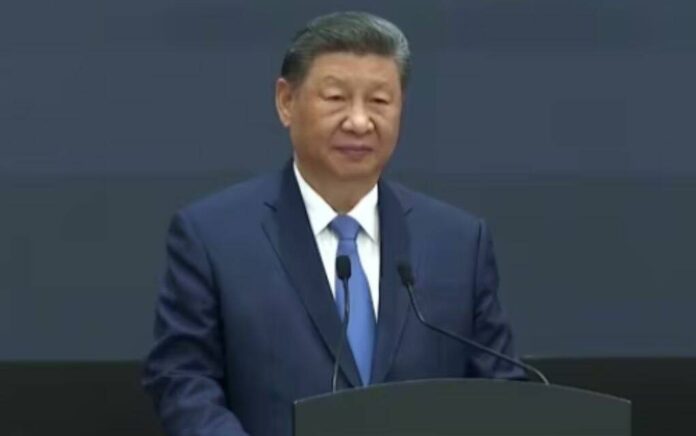
This exchange didn’t happen in isolation. It came during Xi’s first state visit to Washington in more than a decade, a high-profile summit that included formal talks and a state dinner at the White House. According to Perdue, the tone of the discussions between the two leaders has genuinely shifted over time. “These two leaders are beginning to develop a relationship of somewhat trust and also working on the issues. I mean, this was a very candid and open conversation, and every time they talk, I think we see a different level of intimacy about these difficult issues that we’re dealing with,” Perdue said.
Trump and Xi reportedly reached agreement on two critical points during their discussions: that Iran must never be permitted to obtain a nuclear weapon, and that the Strait of Hormuz, a vital artery for global oil shipments, should remain open without the kind of tolls or restrictions Iran has previously threatened to impose. Those are not small diplomatic wins if they hold, given how much global energy markets and international shipping depend on that waterway remaining unobstructed.
None of this should be mistaken for a fully resolved relationship between Washington and Beijing on the Iran question. China’s economic relationship with Iran runs deep, and Beijing has shown a consistent pattern over the years of pursuing its own strategic interests even while making conciliatory public statements to American officials. The Foundation for Defense of Democracies has separately warned that Chinese assistance to Iran has spanned multiple fronts, including drone parts, motors, and dual-use chemicals that have aided Iran’s missile program — assistance that has allegedly helped Tehran strike at its neighbors throughout the region.
That’s precisely why Trump’s blunt, repeated messaging to Xi matters. Diplomatic niceties and vague expressions of concern have rarely moved Beijing’s calculus on matters where it perceives its own strategic interests to be at stake. A direct, unambiguous warning delivered face-to-face by the American president, backed by the kind of “ongoing drumbeat” Perdue described, sends a fundamentally different signal than the kind of soft diplomatic language previous administrations have relied on.
Trump himself struck an upbeat public tone about the broader state of the U.S.-China relationship following the summit, describing the meetings as “very productive” and noting the two countries have “never gotten along better.” Xi, for his part, praised the visit’s “perfection” and described the exchanges as “sincere and in-depth.” Diplomatic pleasantries aside, the substance of what Perdue revealed suggests the Iran question was treated as a serious sticking point rather than a footnote in the broader conversation.
For Americans watching the ongoing conflict with Iran unfold, the message from this summit should be reassuring on one front: the administration is not treating China’s relationship with Tehran as an afterthought. Whether Beijing’s assurances translate into sustained, verifiable changes in behavior remains to be seen, and skepticism about Chinese follow-through is more than warranted given decades of similar promises that haven’t always held up under scrutiny.
Still, getting Xi Jinping to sit across the table and receive a direct, repeated warning about Iran, backed by evidence that Beijing has already begun pulling back some forms of support, represents real diplomatic progress that shouldn’t be dismissed. As the war with Iran continues, cutting off avenues of Chinese support remains one of the most consequential levers Washington has to bring the conflict to a resolution favorable to American interests and regional stability.