The war in Eastern Europe rages on. There’s no end in sight
But Ukraine just came to the White House with an idea of supreme importance.
Ukraine’s Pitch: American Technology, Ukrainian Experience, Mutual Survival
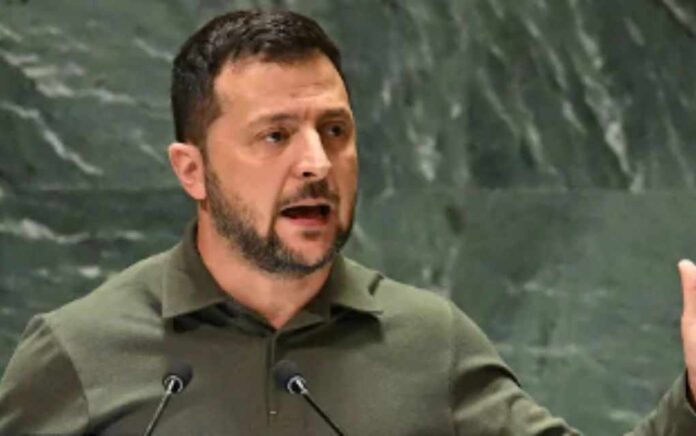
Ukrainian President Volodymyr Zelensky came to CBS News’ “Face the Nation” this Sunday with two simultaneous messages — one optimistic, one alarming — and the contrast captures exactly where Ukraine finds itself eighteen months into the renewed full-scale war.
The optimistic message: a major joint drone development and production deal with American technology companies could be a “huge” game-changer for the war effort, and Zelensky is still waiting on White House sign-off.
“American technological companies, they have a lot of different interesting AI technologies, what we don’t have. And we have a lot of things [that] they don’t have, because [of] our experience,” Zelensky told CBS News.
He is making an argument that a number of defense analysts have found compelling: Ukraine has accumulated more battlefield drone experience than any other military on earth. It has developed innovative anti-drone intercept systems, learned how to operate effectively in heavily contested electronic warfare environments, and refined drone swarm tactics under real combat conditions that no training exercise can replicate. What it lacks is the manufacturing scale, AI integration, and supply chain depth that American defense technology companies possess. Combining Ukrainian battlefield expertise with American industrial and technological capacity could produce advanced systems that neither side could develop alone as quickly.
The deal is reportedly awaiting final approval from the White House. Zelensky expressed confidence it would come.
The Warning: A Massive Attack Is Coming — Again
The alarming message carried more urgency. Ukraine’s intelligence services have detected preparations for a new large-scale Russian air assault, Zelensky told CBS, calling it potentially the heaviest attack since last week’s strikes — when Russia launched 90 missiles and 600 drones against Kyiv and surrounding regions on May 24 in one of the most intense bombardments since the full-scale invasion began.
“We see the preparation,” Zelensky said, warning that the attack could include drones designed to overwhelm air defenses, cruise missiles, and ballistic missiles — a combined arms aerial campaign that has become Russia’s standard operational playbook for maximum civilian disruption.
The back-to-back strikes underscore Zelensky’s broader argument to the Trump administration: that Ukraine’s air defense capacity has been stretched to dangerous limits and requires both additional interceptors and a sustainable resupply of the American-made air defense ammunition that has been running perilously thin. Earlier in the week, he had written separately to Trump and Congress requesting more interceptor stockpiles.
Russia’s apparent strategy is to cycle through Ukraine’s air defense inventory faster than it can be replenished — an attritional approach that, if successful, would eventually leave Ukrainian cities exposed to strikes that cannot be intercepted. The drone deal Zelensky is pitching is partly about offense, but it is also about building a sustainable domestic defense production capacity that reduces Ukraine’s dependence on the American resupply timeline.
The Stakes — And The American Interest
The Trump administration’s posture toward Ukraine has been more transactional than either the Biden era’s unconditional support or the isolationist critique that has periodically surfaced in Republican foreign policy debates. That transactional frame actually suits Zelensky’s current pitch reasonably well: a joint drone production deal is not a gift. It is a commercial and strategic partnership with tangible American benefits — revenue for American defense companies, technology co-development that improves American systems, and a combat-tested laboratory for drone and AI warfare that no simulated training environment can match.
If Trump approves the deal, it will be another demonstration that “America First” is not the same as “America Alone” — and that there are arrangements with allies that serve American interests precisely because they are mutually beneficial. The alternative — allowing Ukraine’s drone capacity to be outpaced by a Russia that has shown no interest in genuine peace — produces outcomes that, in the long run, are considerably more expensive for American security than a joint development agreement.