A storm is brewing for the Trump regime. It could derail everything.
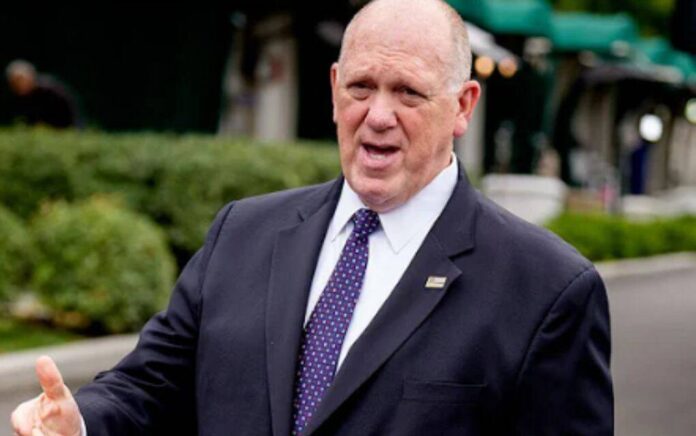
That’s why Trump’s border czar sent out a stark warning to Americans on Fox News.
On Fox News’ “The Ingraham Angle,” Border Czar Tom Homan expressed concerns about escalating tensions against U.S. Immigration and Customs Enforcement (ICE) agents, warning that inflammatory rhetoric could lead to further violence. His comments followed a violent incident in Texas involving Border Patrol agents.
Texas authorities reported that 27-year-old Ryan Louis Mosqueda, a Michigan resident, opened fire on Border Patrol agents at an annex facility. Host Laura Ingraham asked Homan for his perspective on the attack.
Homan, drawing on his extensive experience, noted he had raised similar concerns previously on both Ingraham’s and Hannity’s programs. “The hostile rhetoric hasn’t subsided,” he said, predicting that unchecked verbal attacks could result in deadly consequences, either against agents or protesters. “We’re on a path to serious injury or worse if this doesn’t stop.”
He criticized media outlets for labeling his warnings as fearmongering and pointed to remarks from congressional figures like Rep. Pramila Jayapal, who likened him to a terrorist, Rep. Alexandria Ocasio-Cortez, who accused agents of rights violations, and House Minority Leader Hakeem Jeffries, who referenced the Gestapo.
The attack in McAllen, Texas, saw Mosqueda, armed with a rifle and tactical gear, ambush Border Patrol agents entering a facility. Authorities responded, fatally shooting Mosqueda. Two agents were injured, and a Border Patrol employee was shot in the knee, according to reports.
Since President Donald Trump’s inauguration, opposition from Democrats to his border security and deportation policies has intensified. Some have engaged in disruptive protests, visited detained migrants using public funds, or faced arrests for obstructing federal operations.
Homan warned that heightened rhetoric risks further loss of life, citing the Texas incident as evidence. “I didn’t want to be right, but this won’t be the last time unless we tone down the attacks on ICE and Border Patrol,” he said.
He called for an end to comparisons likening agents to extremists, stressing that they are simply enforcing congressional laws. Homan noted that both ICE and Border Patrol have bolstered security measures at their facilities, but he insisted that de-escalating rhetoric is critical to preventing future violence.
A Breitbart report from June highlighted a 500% surge in assaults on ICE officers during arrests of undocumented migrants. This increase aligns with the Trump administration’s intensified enforcement efforts, particularly in sanctuary cities like Los Angeles, where protests have led to vandalism, arson, and looting.
Trump Administration’s Efforts to Protect America from Illegal Immigration
The Trump administration has prioritized border security and immigration enforcement as a cornerstone of its policy agenda, aiming to safeguard American communities and uphold federal laws. Since taking office in January 2025, President Trump has issued a series of executive orders designed to strengthen border protections and enhance deportation efforts, earning praise from supporters for its decisive approach.
One key measure, outlined in a January 20, 2025, executive order titled “Protecting the American People Against Invasion,” directs the Department of Homeland Security (DHS) to bolster enforcement through increased staffing and resources. The administration has committed to hiring thousands of additional ICE and Border Patrol agents to address the challenges posed by illegal border crossings and criminal activity. This move aims to restore order and deter unlawful entry, with early data showing a 35% drop in border encounters in the administration’s first days compared to the Biden era.
The administration has also targeted sanctuary cities, where local policies limit cooperation with federal immigration authorities. By expanding the 287(g) program, which allows state and local law enforcement to assist ICE, the administration has fostered a “whole-of-government” approach to enforcement. As of June 2025, ICE reported 444 new agreements with local agencies, enhancing its ability to apprehend undocumented migrants, particularly those with criminal records.
To address national security concerns, President Trump signed a proclamation on January 22, 2025, suspending the entry of certain migrants at the southern border, framing illegal crossings as an “invasion” that strains public resources. This action, rooted in constitutional authority, seeks to protect states like Texas, which have borne significant costs from unchecked migration. The administration argues that such measures alleviate pressure on schools, hospitals, and local economies.
The termination of Biden-era programs like the CBP One app, which facilitated asylum processing, marks another shift. By closing this pathway, the administration aims to discourage irregular crossings and streamline deportations. Over 530,000 migrants admitted under Biden’s parole programs are now subject to removal, ensuring that immigration laws are enforced uniformly.
ICE’s intensified operations have yielded significant results. In the first 100 days, the agency removed over 65,000 undocumented migrants, focusing on those with criminal convictions, including 9,639 assaults and 1,479 weapons offenses.
The administration has also revived policies like the Migrant Protection Protocols (MPP), or “Remain in Mexico,” requiring asylum seekers to wait in Mexico during case processing. This policy, reinstated from Trump’s first term, aims to reduce frivolous claims and ease the backlog of 3.6 million immigration cases. Supporters view it as a practical solution to manage border flows while upholding legal standards.
To counter human smuggling and trafficking, the administration established Homeland Security Task Forces (HSTFs) to dismantle criminal networks. These task forces coordinate with state and local law enforcement to disrupt cartels and protect vulnerable populations, particularly children, from exploitation. The creation of a dedicated operational command center further enhances these efforts.
Recognizing economic concerns, President Trump has signaled flexibility in enforcement to support industries like agriculture and hospitality, which rely on migrant labor. In a June 2025 statement, he promised adjustments to protect “good, longtime workers” while maintaining a focus on deporting criminals. This balanced approach aims to address workforce needs without compromising security.
Legal challenges from advocacy groups and Democratic-led states have emerged, with lawsuits targeting policies like the asylum ban and expedited removal expansions. However, the administration remains confident in its constitutional authority, citing past court rulings that upheld similar measures.