Everyone has to eat. But it just might not be possible soon.
Because the Iran war is set to sever food supplies worldwide.
THE BLOCKADE BITES — AND THE WORLD FEELS IT
Sixty-two days in, the U.S. naval blockade on Iranian ports is doing exactly what it was designed to do: squeezing a rogue regime that has held the global economy hostage for decades while the rest of the world looked the other way. But the economic pain now bleeding across international markets isn’t a product of American policy — it’s the direct consequence of Iran’s refusal to give up its nuclear ambitions. Tehran made its choice. The world is living with the bill.
Food prices are climbing, supply chains are fraying, and maritime analysts are raising the alarm about what an extended closure of the Strait of Hormuz could mean for the planet’s most vulnerable populations. The grim arithmetic traces straight back to a regime that has consistently chosen weapons over wheat.
Lars Jensen, CEO and partner at Vespucci Maritime, outlined the stakes for Fox News Digital. “Best case, there is an agreement between the U.S. and Iran within the next few weeks, and the Strait reopens,” he said — but with a crucial caveat: “And it has to be a deal where there is trust that Iran is sufficiently satisfied with the deal such that they do not suddenly close the strait again. Even in that case, it will still take months for the supply chains to revert back to normality.”
FERTILIZER, FAMINE, AND THE WORST-CASE SCENARIO
History offers a chilling precedent. The Suez Canal, shut from 1967 to 1975 following the Arab-Israeli conflict, was once considered similarly irreplaceable — until the world discovered, painfully, that it could stay closed for eight years. Jensen warns the same timeline isn’t unthinkable here. “Worst case, we can look at the eight-year closure of the Suez Canal from 1967 to 1975,” he said. “Despite its importance to the global economy, it proved impossible to reopen the canal for those eight years.”
The commodity most at risk isn’t oil — it’s fertilizer, and the downstream consequences reach into grocery stores and grain fields around the world. The Persian Gulf region accounts for nearly a third of the planet’s seaborne fertilizer supply, and disruption there ripples out to farms from Southeast Asia to Sub-Saharan Africa. “Fertilizer is the most important element. Thirty percent of the world’s seaborne fertilizer comes from the Persian Gulf,” Jensen told Fox News Digital. “Fertilizer prices are already rising fast.”
The human toll of that number is stark. In wealthy countries, Jensen warned, the effect shows up as higher grocery bills come harvest season. Elsewhere, the calculus is far graver. “In poor countries, it means that farmers right now cannot afford fertilizer. This will lead to the harvest being lower later in the season, leading to rapid increases in food prices in very poor countries. And such a situation increases the risk of famine and conflict.”
IRAN CHOSE THIS — AND THE WORLD MUST HOLD THE LINE
None of this was inevitable. It is the direct result of decades of Iranian defiance — nuclear brinkmanship, terrorism financing, and a willful strategy of using the world’s most critical waterway as a bargaining chip. The Trump administration’s blockade didn’t create this crisis; Tehran did, the moment it chose enrichment over engagement.
Commercial shipping has not merely slowed — it has effectively stopped in the region. “Cargo vessels are not going through for the simple reason that commercial companies do not want to see their seafarers potentially killed,” Jensen noted. And over the arch of Enqelab Square in Tehran, a giant banner now hangs, declaring: “The Strait of Hormuz will remain closed; the entire Persian Gulf is our hunting ground.” The swagger of a cornered regime.
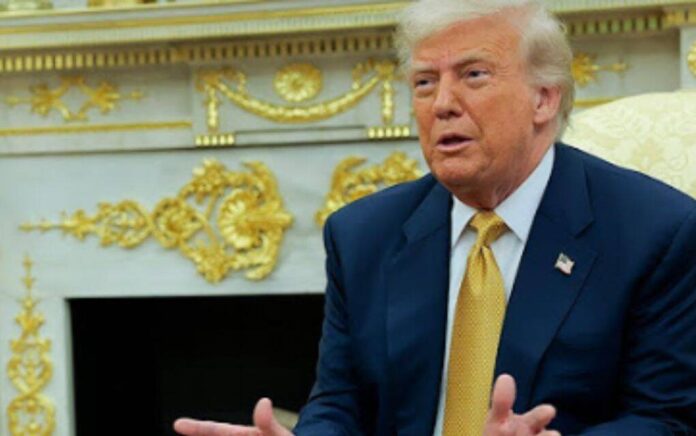
President Trump has made the American position unambiguous: the blockade stays until Iran agrees to dismantle its uranium enrichment program. Diplomatic efforts continued this week, though with limited signs of progress. The price of Iranian intransigence is being tallied in rising food costs and shrunken harvests — and the regime in Tehran owns every cent of it.